Linx CO₂ and UV laser systems are built for high print volumes — food, drink and pharmaceutical lines — with any-orientation coding, full touch-screen control and no ink or solvent to run out.

No ink, make-up or solvent. Lower running cost and nothing to run out mid-shift.
Mark top, side or angled surfaces without repositioning the line.
Simple message creation and changeover from an intuitive operator interface.
Indelible codes that cannot rub off — ideal for regulated food, drink and pharma.
Few wear parts and long service intervals mean less downtime and predictable cost.
Monitor and control your laser coders across sites, anywhere, anytime.
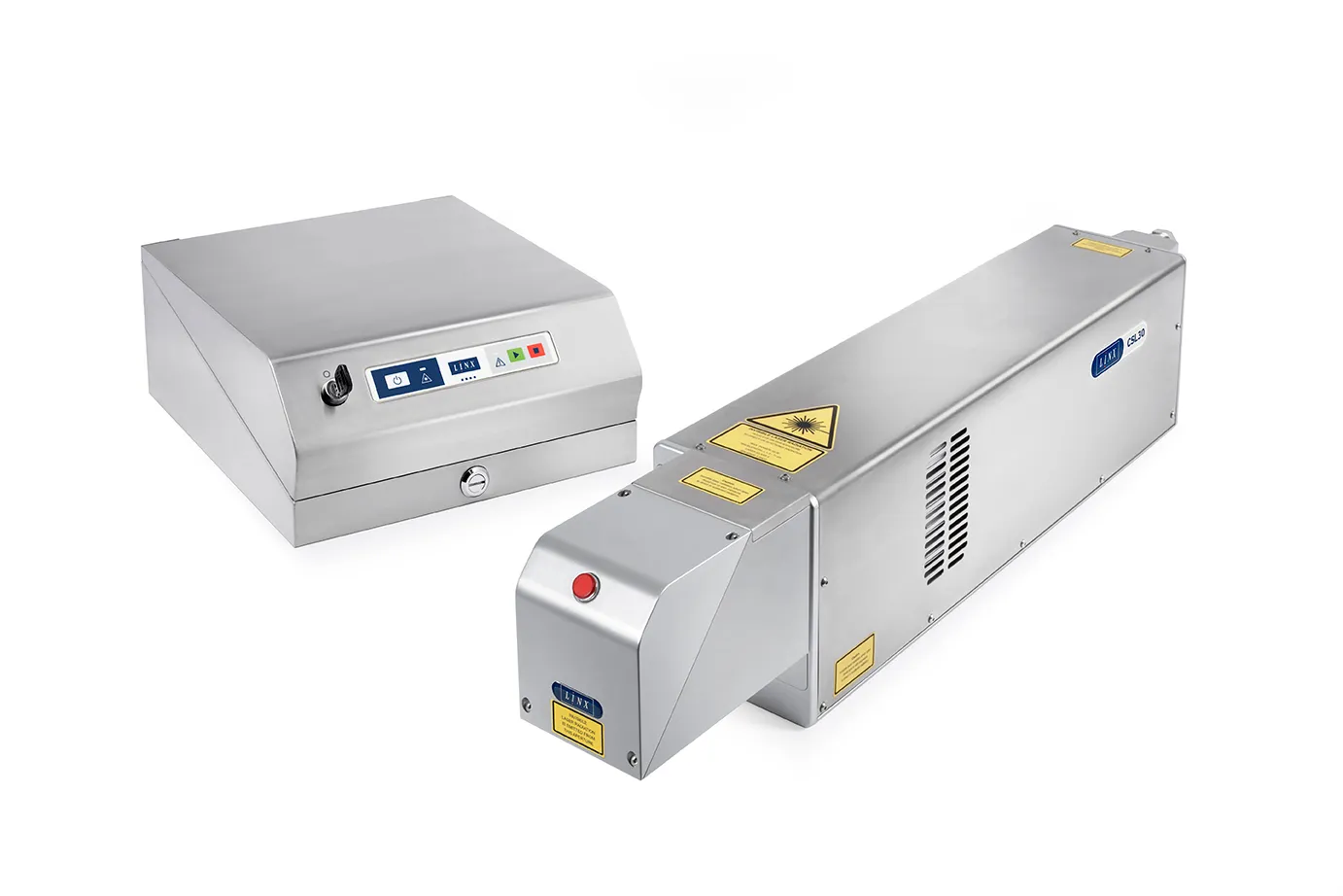 30 W CO₂
The largest marking area in its class — sharp codes on hard-to-mark materials like glass and rubber.
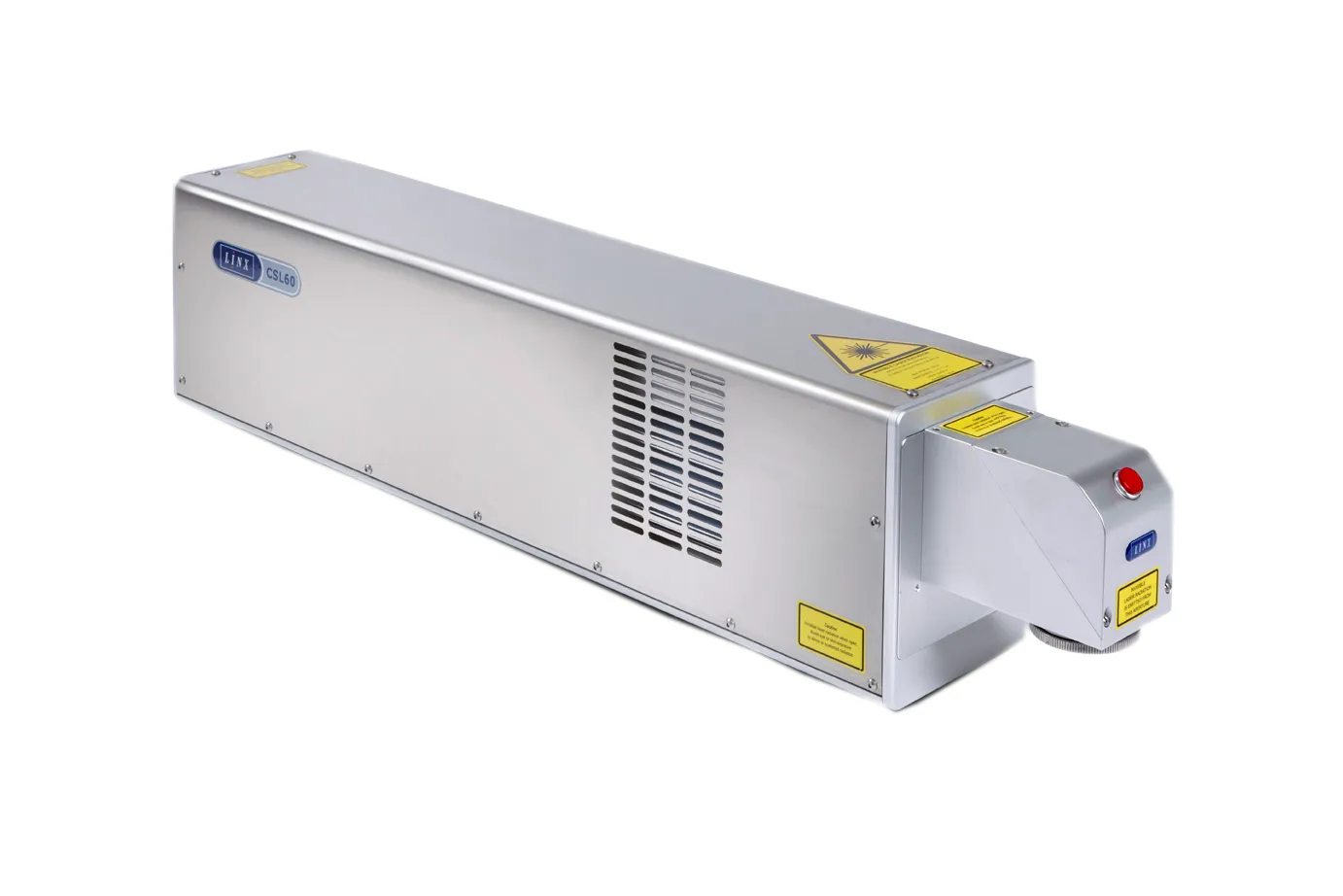 60 W CO₂
High power for the hardest-to-mark materials, with full IP65 for harsh beverage and extrusion lines.
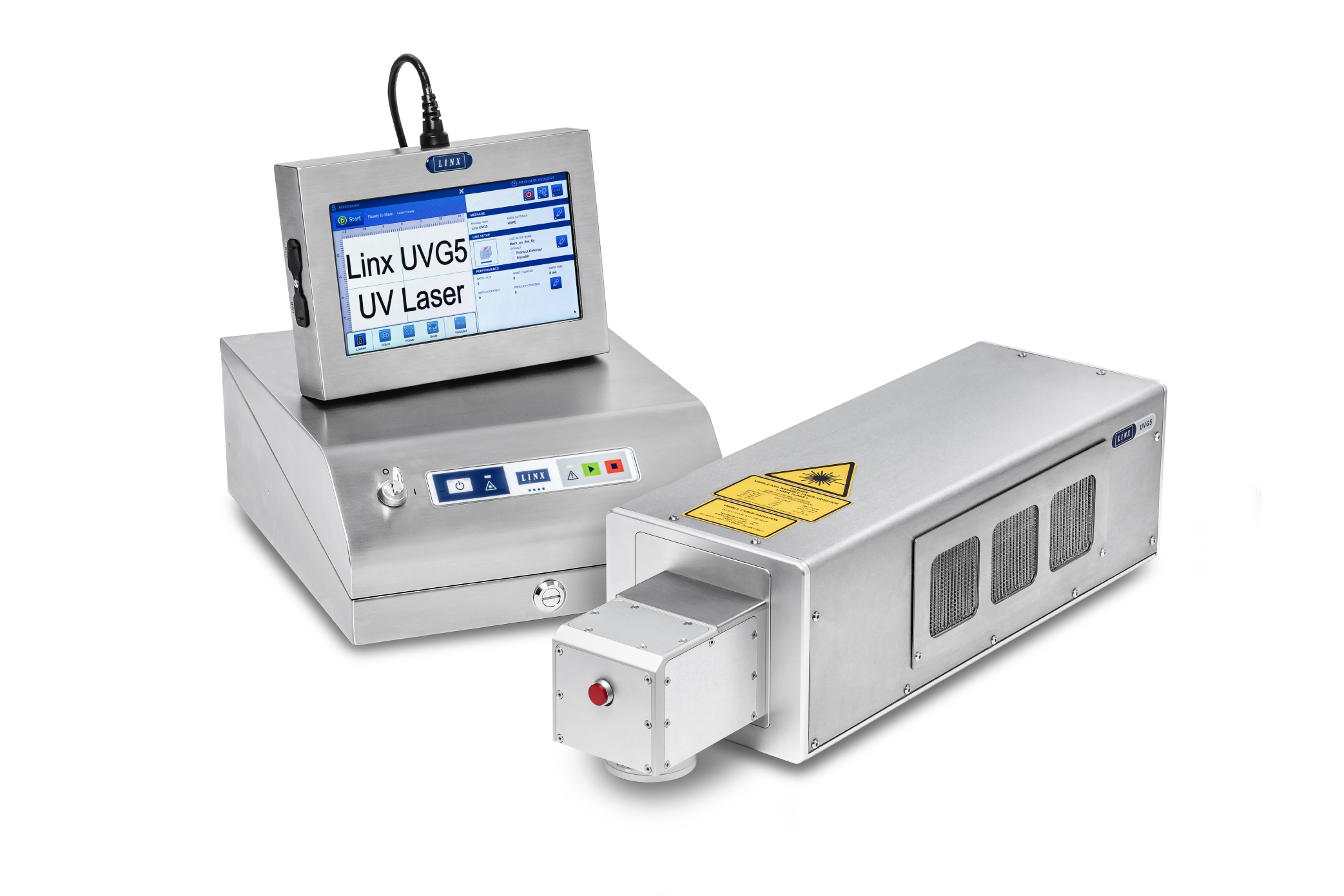 UV · 4 W
A UV laser for permanent, high-contrast marking on flexible films and rigid plastics with minimal thermal stress.
Not sure? Send us your product and substrate — we'll run a sample mark and recommend the right technology.
CO₂ lasers mark a wide range of materials — cartons, glass, coated surfaces, rubber, many plastics and films. The right model and lens depend on your substrate; we run a sample test before recommending a system.
The upfront cost is higher, but with no inks, make-up or solvent and minimal servicing, total cost of ownership is often lower on high-volume lines — and the codes are permanent.
Most laser installations pair with a fume extraction unit suited to your substrate. We specify, supply and install the right extraction as part of commissioning.
It depends on the model and code, but the range scales from versatile mid-speed lines (CSL30) up to the CSL60 at up to 70,000 bottles per hour.
